
They faced increasing competitors for jobs as more Mexicans moved into the area and took over the labor force. Those who loitered or were drunk or jobless were detained and auctioned off as laborers to those who paid.


their fines. They were often paid for work with liquor, which just increased their issues. When New England author and Indian-rights activist Helen Hunt Jackson toured the Indian villages of Southern California in 1883, she was appalled by the bigotry of the Anglos living there. She composed that they treated Indians even worse than animals, hunted them for sport, robbed them of their farmlands , and brought them to the edge of extermination. Jackson’s trip influenced her to write her 1884 novel, which she hoped would give a human face to the atrocities and indignities suffered by the Indians in California, and it did. The novel was immensely effective, motivating 4 motion pictures and a yearly pageant in Hemet, California. A number of the Indian villages of Southern California endured since of her efforts, consisting of Morongo, Cahuilla, Soboba, Temecula, Pechanga, and Warner Springs. Remarkably, the Tongva also endured. in 2006, the Los Angeles Timesreported that there were 2,000 of them still living in Southern California. Some were organizing to protect burial andcultural sites. An 1887aerial image ofLos Angeles, drawn from a balloon. The city’s very first newspaper,, was a bilingual publication which started its run in 1851. In the 1870s, Los Angeles was still bit more than a town of 5,000. By 1900, there were over 100,000 residents of the city. theclosesthotel.com
Not known Incorrect Statements About La History
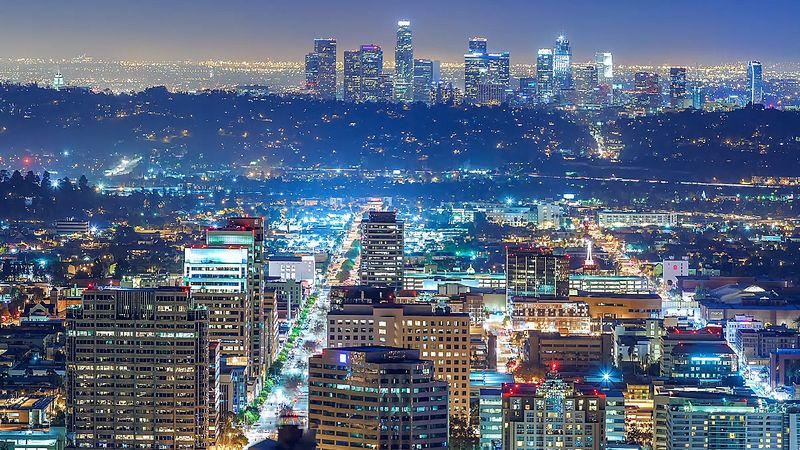
A number of guys actively promoted Los Angeles, working to establish it into a terrific city and to make themselves rich. Angelenos set out to remake their geography to challenge San Francisco with its port facilities, railway terminal, banks and factories. The Farmers and Merchants Bank of Los Angeles was the first bundled bank in Los Angeles, founded in 1871 by John G. Hellman. Wealthy Easterners who came as travelers acknowledged the development chances and invested greatly in the region. During the 1880s and 1890s, the central business district( CBD) grew along Main and Spring streets towards Second Street and beyond.
Much of Los Angeles County was farmland, with anemphasis on cattle, dairy products, veggies and citrus fruits. After 1945, most of the farmland was converted into real estate systems.
The city ‘s first railway, the Los Angeles & San Pedro Railway, was inaugurated in October 1869 by John G. Downey and Phineas Banning. It ran 21 miles( 34 km) between San Pedro and Los Angeles. Harrison Gray Otis, founder and owner of the, and a variety of company associates embarked on reshaping southern California by broadening that into a harbor at San Pedro utilizing federal dollars. This put them in dispute with Collis P. Huntington, president of the Southern Pacific Business and one of California’s “Big 4” financiers in the Central Pacific and Southern Pacific. (The “Big Four” are often numbered amongst the “burglar barons” of the Gilded Age). In April 1872, John G. Downey went to San Francisco and succeeded in representing Los Angeles in conversations with Collis Huntington concerning Los Angeles’s efforts to bring the Southern Pacific Railroad through Los Angeles.

In 1876 the Newhall railway tunnel located 27 miles (43 km) north of Los Angeles between the town of San Fernando and Lyons Station Stagecoach Stop (now Newhall) was completed, providing the last link from San Francisco to Los Angeles for the railroad. The 6,940-foot-long railroad tunnel (2,115. 3 m) took a year and a half to complete. More than 1,500 primarily Chinese workers took part in the tunnel building, which started at the south end of the mountain on March 22, 1875. Numerous of them had prior experience working on Southern Pacific’s situated tunnels in the Tehachapi Pass. Due to the sandstone composition of the mountain that was saturated with water and oil, frequent cave-ins took place and the bore had to be constantly fortified by timbers throughout excavation.