
The first was the nation-wide development of “sundown towns,” neighborhoods where black people were not allowed to live (under the umbrella of racially restrictive covenants) or be seen in after sundown. For many years, LA neighborhoods including Hawthorne, Palos Verdes and South Pasadena were considered sundown towns and prevented by minority populations. The 2nd practice was known as “redlining.” When the Home Owners’ Loan Corporation was developed in the 1930s as part of the New Offer, it was meant to bolster the real estate market. It also evaluated and ranked the worth of land and risks according to an area’s economic and racial makeup.

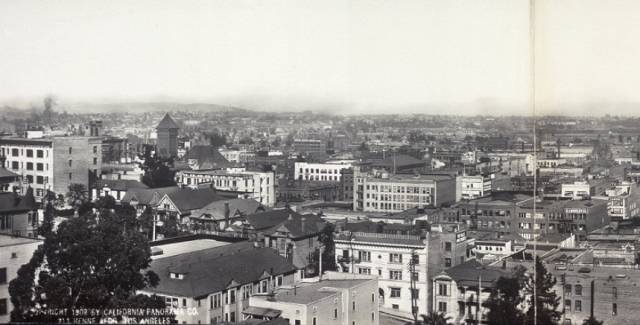

The Fair Real Estate Act formally considered both activities illegal in 1968, however their deep-seeded scars remain. Once upon a time, Chavez Ravine was a flourishing, friendly hillside neighborhood of Mexican-American households, many of whom had roots in the neighborhood extending back to the Victorian period. There was a basic shop, a primary school, and surrounding Elysian Park for the Ravine’s various children to explore. But in 1950, Chavez Gorge was slated to be the site of a huge public housing task called Elysian Park Heights, which would offer 3,600 cost effective houses. The only problem: the neighborhood would be leveled. Chavez Ravine homeowners protested, staging sit-ins at the Mayor’s office and protesting at Town hall.
More About Los Angeles History
Using the power of noteworthy domain, the city had the ability to buy or displace many of the residents … By 1957, just 20 households lived there. The real estate job failed, and the city struck a handle the Brooklyn Dodgers baseball group- and offered them 315 acres of Chavez Gorge to build their new arena. On Black Friday, May 9, 1959, the remaining families of Chavez Ravine were met bulldozers and constables wielding expulsion orders. In a heart-wrenching scene, defiant households were by force dragged out of their homes. Dodger Stadium opened on April 10, 1962. On the hot night of August 11, 1965, a young black guy called Marquette Frye was pulled over for driving under the influence in the Watts area of South L.A.

The crowd started to get violent, tossing rocks, and pulling passing white drivers out of automobiles. For the next five days, turmoil grasped South LA. Years of sadness and rage result in days of damage. “For years, civil liberties activists had actually challenged Los Angeles’s pervasive racial injustice, even as the news media failed to call city leaders to account for unequal schools, cops brutality and real estate and task discrimination,” professor Jeanne Theoharis wrote in the New York Times. When the uprising was lastly quelled, there were “34 dead, 1,032 hurt, nearly 4,000 apprehended, and $40 million worth of residential or commercial property ruined.” The essential issues remained.
See This Report about Los Angeles History
Past earthquakes have actually ravaged the region, but we’ve constantly recovered. Below are three of the greatest of the past 100 years. A 6. 3 magnitude earthquake that is considered “the deadliest seismic event in taped Southern California history,” it killed 120 individuals and may have been triggered by the drilling for oil. For a remarkable imaginary description of living through this quake, read John Fante’s Ask the Dust. This 6. 6 early morning earthquake lasted for twelve seconds and devastated the San Fernando Valley, “flattening highway overpasses, collapsing hospitals, falling power stations, triggering fires and threatening to rupture dams and flood the houses of 10s of thousands,” according to the Los Angeles Daily News.

This 6. 7 magnitude quake, centered in the San Fernando Valley, collapsed a part of the I-5, eliminated 60, caused 466 fires, and hurt more than 9,000 individuals. For first-hand accounts, ask any native Angeleno over 30, or read this traumatic collection of first-person accounts. It all noises so familiar. Five days of anger, grief and damage grab LA as the world watches. On March 3, 1991, Rodney King was arrested by cops after a high-speed chase. White law enforcement officer were shot completely beating Kingkicking him long after he had actually fallen to the ground. On April 29, 1992, four policeman charged in the pounding were acquitted of utilizing extreme force in the King beating.
What Does The Story Of Los Angeles Mean?
Violence started a short time later at the intersection of Normandie and Florence. By the night, the circumstance was explosive. A truck motorist called Reginald Denny was pulled out of his automobile and extremely beaten, an event broadcast live. The city management was shockingly irresponsible and MIA; authorities chief Daryl Gates selected to participate in a fundraising event in Brentwood as the circumstance spiraled out of control. Over the ensuing five days, over a thousand buildings were robbed and burned, 63 individuals died, and the city incurred more than $1 billion in damages. Lots of saw the Uprising as the city’s wake-up call.