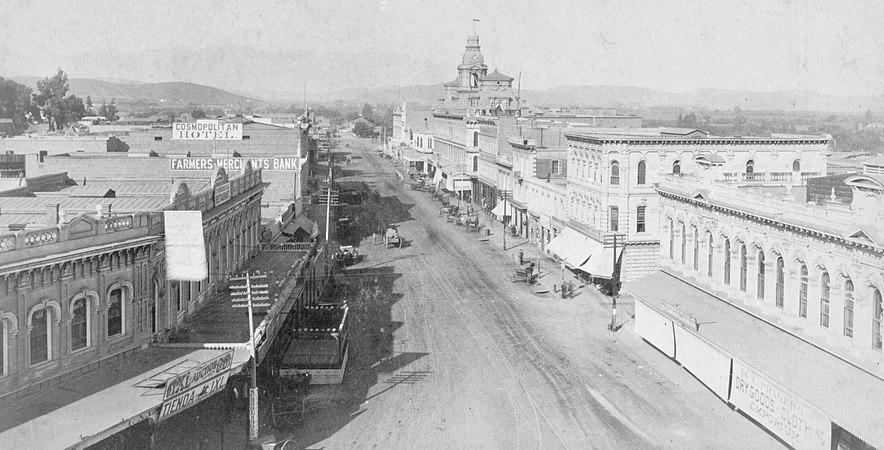
You understand Hollywood Boulevard, the Lakers, and the traffic, however here are a couple of Los Angeles nuggets that may have slipped past you. When LA was established, the city’s complete name was “El Pueblo de Nuestra Senora Reina de los Angeles sobre el Rio Porciuncula.” (If your Spanish is rusty, that translates to “The town of our girl queen of the angels on the Porciuncula River.”) In 1892, oil was discovered near what is now Dodger Arena. By 1923, Los Angeles produced one quarter of the world’s oil. It still sits atop the 3rd biggest oil field in the country! An oil derrick on the property of Beverly Hills High School produces about 400 barrels a day.


Very few gift buyers consider going to the coroner to finish their holiday shopping. But if you do, the LA coroner’s workplace has a gift shop. When it rains in LA, it pours. On April 5, 1926, a gauge in the San Gabriel Mountains gathered an inch of rain in simply one minute. While in February 1978, nearly a foot of rain fell in 24 hours. How did the movie industry wind up in LA? To avoid Thomas Edison. Edison, who resided in New Jersey, held many of the nation’s film patents. Filmmakers got away westward to prevent Edison’s copyright claims. Beverly Hills started as a modest lima bean cattle ranch.
In 2006, a new tar pit was found. It consisted of the remains of saber-toothed cats, huge sloths, American lions, and a mammoth that was called Zed. If Los Angeles were its own nation, its economy would be bigger than Saudi Arabia, Switzerland, and Sweden’s. In 1996, Charlie Shine bought 2,615 outfield seats at Angels Arena in nearby Anaheim so he might capture a crowning achievement ball. He came up empty handed. Lots of stars are buried in Hollywood’s Forever Cemetery. One of them is Looney Tunes voice actor Mel Blanc, whose gravestone reads, “That’s all folks.” It is illegal to lick a toad in the City of Angels.

It’s also unlawful to drive more than 2000 sheep down Hollywood Boulevard. The Hollywood sign originally stated “Hollywoodland.” (It was an ad for Tinseltown’s newest property development.) At just 320 feet long, the Angels Flight slope is one of the shortest bundled railways worldwide. Each spring, the Getty Museum employs goats to maintain the scrub around its manicured grounds. Unlike other baseball stadiums, Dodger Stadium is sculpted deep into the ground. Parking is available for each stadium level. L.A. is home to the biggest stone ever transported, a 340-ton chunk of granite that struck the roadway in 2012.
The Best Guide To Los Angeles History


When they were first installed, the steel walls of the Walt Disney Auditorium showed so much light that nearby pathways struck temperature levels of 140F.
Arriving in a new city can be hard, particularly an unwieldy, disjointed, sprawling metropolis like Los Angeles. Something that helps ties all Angelenos together? Discussing things we know! We talk over long, unemployed brunches, over weekend walkings with our lots of pets, and at market dinner parties high in the hills, in midcentury mansions we can not believe our colleagues can afford. When the city’s history comes up, it’s good to understand the fundamentals, so you can hold your own and not ask foolish concerns like, “What’s a Chavez Gorge?” More notably, history can ground you in your new city, and make you feel like a native.
, much like a genuine Angeleno! El Pueblo de la Reina de Los Angeles (The Town of the Queen of Angels) was formally founded on September 4, 1781. The settlement became part of Spain’s colonization of California, which began in the 1760s as a reaction to Russian development into Alaska and Northern California. According to historian Nathan Masters, the pueblo became part of a three-pronged plan to colonize California. “Settlement would take 3 kinds,” he states. Settlers would build “a string of religious objectives to convert the native peoples into Spanish topics, presidios to protect Spain’s military hold on the province, and pueblos to provide the forts with food and develop a secular, civilian presence in the area.” The Los Angeles citizens were comprised of 44 pioneers from Spanish Mexico, known as the “pobladores.” According to historian Antonio Rios-Bustamate, the 23 adults and 21 kids included individuals of Spanish, Mexican, American Indian, and African descent.
More posts about Los Angeles history